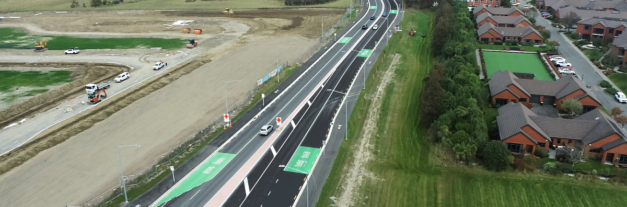
Te Rourou Bridge has opened in Richmond three months ahead of schedule, delivering a major boost to flood resilience, safer community connections and long-term value for one of Tasman’s growing urban areas.
The new 48-metre Te Rourou Bridge replaces the previous structure over Borck Creek, a vital stormwater channel that carries water from the Richmond foothills and surrounding urban areas to the Waimea Inlet. Draining around 1,430 hectares of land, the creek plays a critical role during heavy rain events.
With the new bridge now in place, Borck Creek can carry up to 105 cubic metres of water per second – three times the capacity of the previous bridge. The upgrade will help reduce flood risk during major storms and improve resilience for Richmond’s growing community.
Delivered in 61 weeks, including 25 night shifts, the team completed the project three months ahead of the original schedule and within budget. Overall physical construction cost came in at just over $10 million.
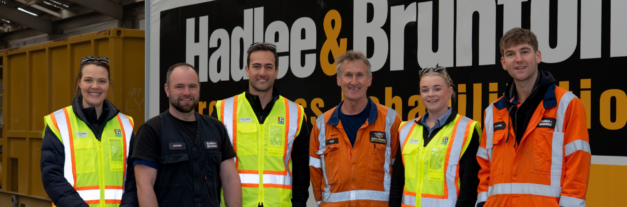
Fulton Hogan Project Manager, Matthew Bruce, says the project was a significant engineering effort, made more challenging by difficult conditions from the outset.
“We started this project in July 2025, which ended up being the wettest July on record,” he says.
“At the time we were trying to bypass Borck Creek and trench wastewater pipes four metres below ground level. It was a tough start to the project, effectively making no progress for three weeks, up to our knees in mud and contemplating our life choices. In a way, that first month sort of set the tone, and the team then had a point to prove.”
Matthew says the team was determined not only to recover lost time, but to complete the project ahead of schedule if possible.
Built for resilience
The complexity extended well beyond the bridge structure itself. Within the immediate bridge area, crews installed 1.2 kilometres of water, wastewater and stormwater pipes, along with telecommunications and electrical ducts.
Because the bridge sits beside the Richmond water treatment plant, nearly every major raw and treated water trunk main in the area had to be diverted to accommodate the widened corridor.
Construction involved more than 1,000 tonne of steel and 3,700 tonne of concrete, with 16 deep foundation piles supporting 51 precast bridge beams.
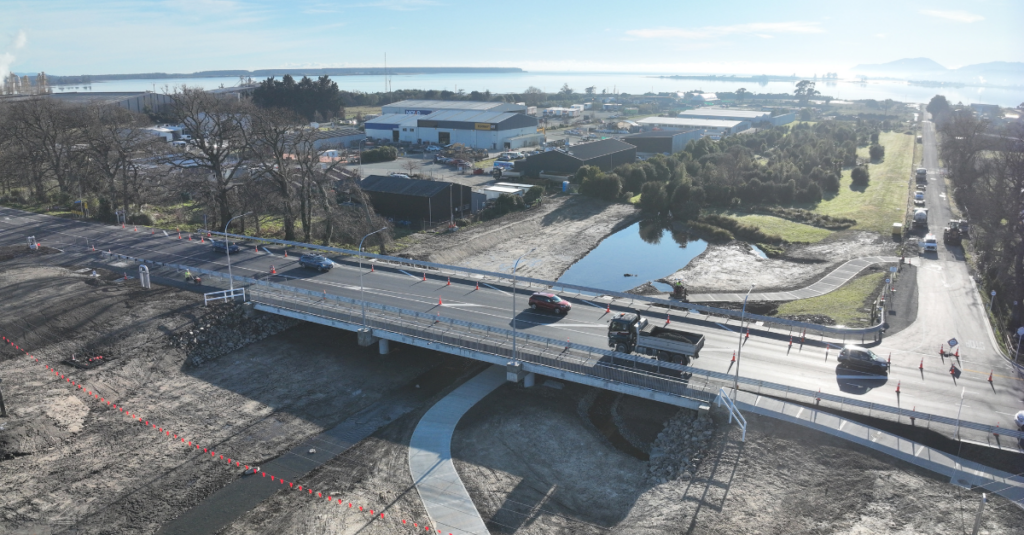
Construction involved more than 1,000 tonne of steel and 3,700 tonne of concrete, with 16 deep foundation piles supporting 51 precast bridge beams.
Managing complexity and traffic
Managing traffic was another major challenge. With weekday road closures and stop/go traffic controls not permitted, the team first built a bypass road around the site, including a 30-metre temporary bridge.
Matthew says one of the most demanding stages was switching traffic from the temporary route onto the new bridge.
“The team took the option to close the road for one super weekend and complete the tie-ins working 24 hours a day,” he says.
“We started at 7pm Friday, and by Sunday morning had laid the bitumen treated basecourse in 200mm lifts at a combined thickness of up to 800mm. We still managed to open the road 13 hours ahead of schedule, at 5pm on the Sunday.”
Community, culture and connection
The project also delivered wider environmental and community benefits. More than 2,000 native plants will be established along the creek, and more than 13,000 square metres of grass hydroseeding is helping restore the surrounding landscape.
A new shared-use underpass now provides a safer connection between Headingly Lane and Berryfields, allowing people to move through the area without needing to cross busy Lower Queen Street.
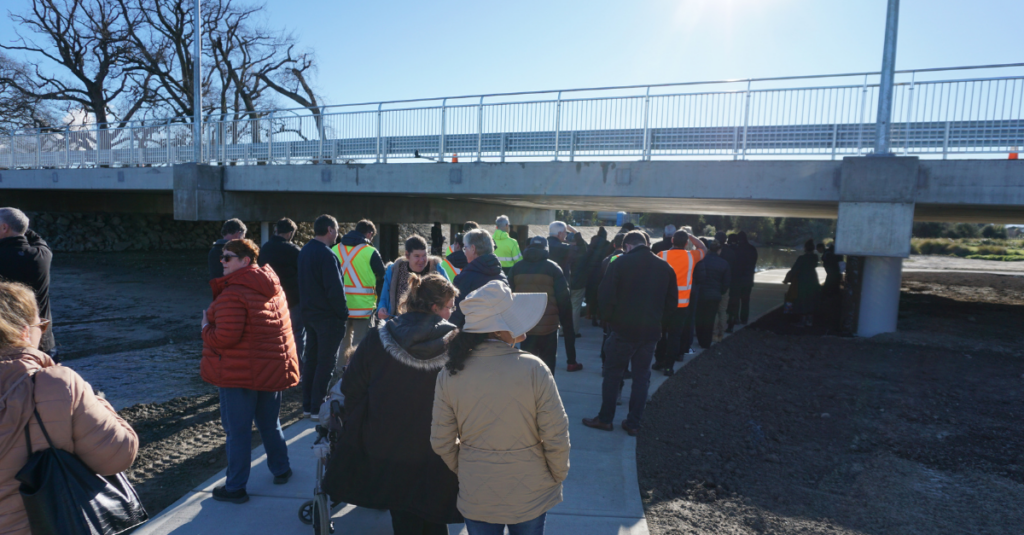
A new shared-use underpass now provides a safer connection between Headingly Lane and Berryfields.
The bridge also reflects the identity of the area. Eight steel panels on the piles celebrate the eight iwi of Te Tauihu, while the name Te Rourou, meaning food basket, recognises the site’s historic importance as a food-gathering area.
Delivery and community response
Most of the work was self-delivered by Fulton Hogan, including earthworks, three-waters, roading and bridge construction, alongside Civil South, with support from a range of subcontractors and suppliers.
Matthew says the response from the community had been overwhelmingly positive, particularly given the complexity of the project and the need to keep around 13,000 vehicles per day moving through the area during construction.
“Having built a bypass road and completed all tie-in works during weekends or at night, we’ve been able to complete the project with very minimal disruption,” he says.
“The feedback Fulton Hogan and Tasman District Council have received has been awesome, particularly as people can now see and appreciate the bridge, and use the new shared path under the bridge.”
The Te Rourou Bridge project is also part of a wider programme of work to improve flood capacity in the area as Richmond West and the Waimea Plains continue to grow. A future phase, tentatively planned for 2027/28, will widen the downstream channel from the bridge to the Waimea estuary, lifting capacity to match the new bridge’s 105 cubic metres per second.
For now, the completion of Te Rourou Bridge stands as a strong example of infrastructure delivering more than its core function – improving safety, resilience, community connection and enhancement of the natural environment while preparing the region for future growth.
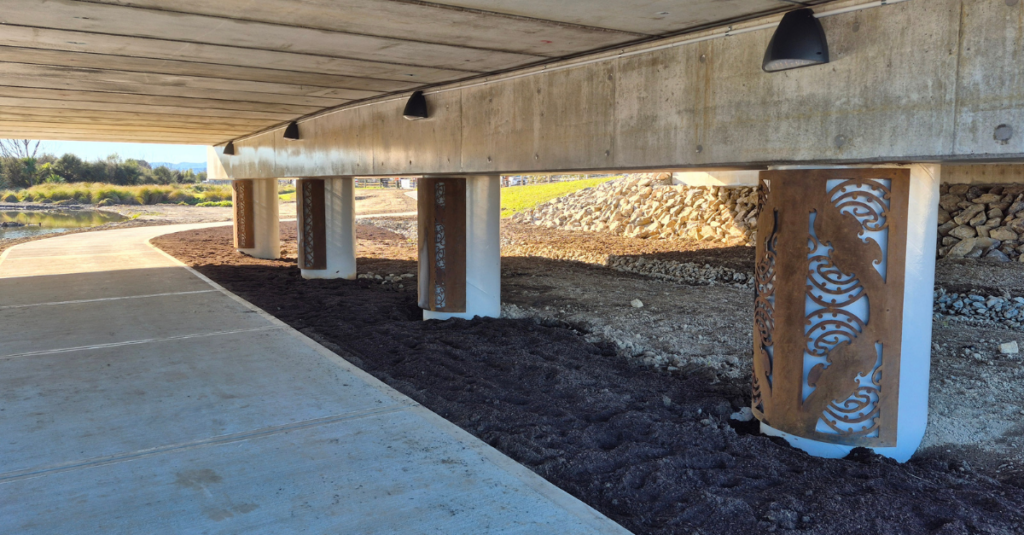
Eight steel panels on the piles celebrate the eight iwi of Te Tauihu, while the name Te Rourou, meaning food basket, recognises the site’s historic importance as a food-gathering area.